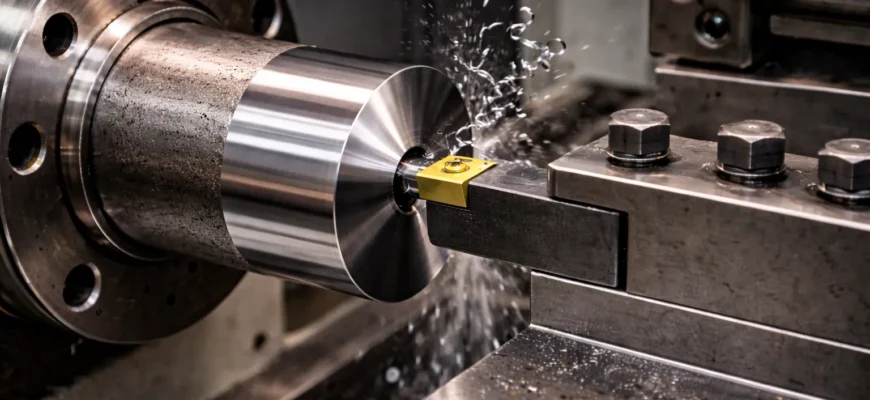
The Enduring Power of Lathe Machining
Welcome to the definitive guide to lathe machining. In an era of rapid technological advancement, the lathe remains a foundational pillar of manufacturing, essential for shaping raw materials into precise components. Whether you’re a student embarking on a new career, a seasoned machinist looking to refine your skills, or a business owner aiming to optimize production, this guide will equip you with the knowledge and insights to master this indispensable machine.
This guide will take you from the fundamental principles of lathe operation to advanced techniques, cutting-edge technologies, and their myriad real-world applications. We will explore the mechanics of the machine, the critical role of tooling, stringent safety protocols, and the precision required for quality control. Furthermore, we will delve into the modern evolution of lathe machining, including CNC, automation, and data-driven approaches, underscoring how these advancements integrate with broader organizational goals and enhance performance. By the end of this journey, you will possess a comprehensive understanding that empowers you to operate lathes with confidence, efficiency, and a strategic mindset, ready to meet diverse customer requests and drive manufacturing excellence.
To get started, you’ll ideally have access to learning resources that may include machine manuals, safety guidelines, and basic material knowledge. Patience, a methodical approach, and a commitment to precision are your most valuable tools.
Understanding the Lathe Machine: Fundamentals & Types
The lathe is a machine tool that rotates a workpiece about an axis of rotation to perform various operations such as cutting, sanding, knurling, drilling, facing, turning, and deforming with tools that are applied to the workpiece to create an object which has symmetry about that axis. Its ability to impart precise shapes, reduce material with controlled accuracy, and create consistent finishes makes it indispensable across countless industries.
The Core Mechanics: How a Lathe Works
At its heart, a lathe operates on a simple principle: rotation. The workpiece is secured and rotated by a spindle, driven by a motor. A cutting tool, held stationary relative to the rotating workpiece, is then brought into contact with it. The controlled movement of the cutting tool against the rotating material removes excess material, shaping the workpiece to the desired dimensions. This rotation provides a consistent surface for the tool to act upon, enabling the creation of cylindrical, conical, or more complex symmetrical forms. The precise control over the speed of rotation, the feed rate of the tool, and the depth of cut are paramount to achieving the desired outcome.
Essential Components of a Lathe Machine
 Anatomy of a Lathe: This diagram illustrates the key components of a standard engine lathe, each playing a critical role in its operation.
Understanding the key components is crucial for effective operation and maintenance:
- Headstock: Houses the spindle, chuck, and drive mechanism, providing the rotational power to the workpiece.
- Tailstock: Located at the opposite end of the headstock, it supports longer workpieces, can hold drill bits or reamers for center drilling, and assists in threading operations.
- Bed: The main structural element of the lathe, providing a stable foundation for all other components. It typically features ways (precision-ground tracks) that guide the movement of the carriage and tailstock.
- Carriage: A movable assembly that supports the tool post and facilitates longitudinal (along the bed) and cross-slide (perpendicular to the bed) movements of the cutting tool.
- Tool Post: Mounted on the cross-slide, it securely holds the cutting tool(s) in the correct position for machining.
- Leadscrew and Feed Rod: The leadscrew is used for threading operations, while the feed rod drives the carriage and cross-slide for turning and facing.
- Chuck: A clamping device attached to the spindle that holds the workpiece. Common types include three-jaw (universal) and four-jaw (independent) chucks.
- Apron: Houses the controls for the carriage and cross-slide feeds and traverses.
- Motor: Provides the power to rotate the spindle and drive the feed mechanisms.
Types of Lathe Machines and Their Applications
The diversity of lathe designs caters to a vast range of manufacturing needs:
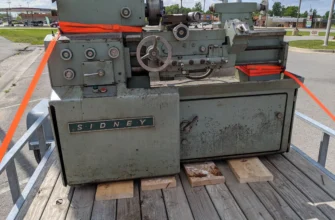
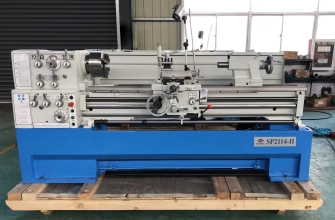
- Engine Lathes: The most common type, offering versatility for general-purpose machining. They are ideal for turning, facing, threading, and drilling operations on a wide variety of materials and component sizes. Their manual controls provide direct operator interaction.
- Turret Lathes: Equipped with a multi-sided turret that can hold several cutting tools. This allows for rapid tool changes without stopping the machine, significantly increasing efficiency for repetitive production runs.
- Tracer Lathes: Use a template to guide the cutting tool, allowing for the duplication of complex contours and profiles.
- Automatic Lathes: Designed for high-volume production, these lathes operate with minimal user intervention, often programmed to perform a series of operations sequentially.
- Swiss-Type Lathes: Feature a guide bushing that supports the workpiece close to the cutting tool. This provides exceptional rigidity and precision for machining long, slender parts, commonly found in watchmaking and medical device manufacturing.
- CNC (Computer Numerical Control) Lathes: The modern workhorse, these lathes are programmed using digital instructions (G-code and M-code). They offer unparalleled accuracy, repeatability, and the ability to machine highly complex geometries with minimal operator input, forming the backbone of automated manufacturing programs. The electronics and advanced operating systems of CNC machines allow for intricate software development and integration into digital workflows.
Choosing the Right Lathe for Your Needs
Selecting the appropriate lathe depends on several factors:
- Workpiece Size and Material: The maximum diameter and length of the parts you’ll be machining, as well as their hardness and machinability, will dictate the lathe’s swing, bed length, and power requirements.
- Operation Complexity: Simple turning and facing tasks may suffice with an engine lathe, while complex contours or high-volume production might necessitate a tracer or CNC lathe.
- Production Volume: For small batches or one-off parts, a manual lathe might be cost-effective. High-volume Applications often justify the investment in automatic or CNC machines for improved performance and reduced labor costs.
- Budget: Lathes range from affordable manual machines to sophisticated CNC centers.
- Accuracy Requirements: Specific customer requests for tight tolerances will guide the choice towards more precise machines, often CNC-equipped.
Safety First: Essential Protocols for Lathe Operation
Safety is paramount in any machining environment. Adhering to strict protocols ensures the well-being of the operator and the integrity of the equipment and workpiece.
- Personal Protective Equipment (PPE): Always wear safety glasses with side shields, appropriate footwear, and avoid loose clothing or jewelry that could become entangled. Hearing protection may be necessary.
- Machine Guarding: Ensure all guards are in place and functional before operating the machine.
- Workpiece Security: Verify that the workpiece is securely held in the chuck or between centers. Loose workpieces can be ejected at high speeds, causing serious injury.
- Tool Inspection: Before operation, inspect cutting tools for chips, cracks, or excessive wear. Ensure tools are properly secured in the tool post.
- Clearance: Maintain a clear working area around the lathe. Keep hands and tools away from moving parts and rotating workpieces.
- Emergency Stop: Familiarize yourself with the location and operation of the emergency stop button.
- Lubrication: Ensure proper lubrication of machine parts to prevent overheating and ensure smooth operation, which contributes to overall safety and performance.
- Never Leave a Running Machine Unattended: Always ensure the machine is stopped before leaving the immediate vicinity.
- Follow Operating Manuals: Always refer to the specific machine’s operating manual for detailed safety instructions and steps.
Mastering Lathe Operations: From Basics to Advanced Techniques
Lathe operations transform raw stock into precisely dimensioned parts. Mastering these techniques is fundamental to achieving desired outcomes and optimizing performance.
Fundamental Lathe Operations
These are the building blocks of lathe machining:
- Facing: Creates a flat surface at the end of a rotating workpiece. The cutting tool is fed perpendicular to the axis of rotation, starting from the center and moving outwards or vice versa. This operation is critical for establishing a datum surface.
- Turning: Reduces the diameter of a workpiece. The cutting tool is fed parallel to the axis of rotation. This can be done as “rough turning” (removing large amounts of material quickly) or “finish turning” (achieving precise dimensions and surface finish). Different steps are involved for internal and external turning.
- Drilling: Creates a hole at the center of a workpiece. A drill bit is held in the tailstock and fed into the rotating workpiece.
- Boring: Enlarges an existing hole or creates an internal cylindrical surface. A boring bar, held in the tool post, is fed into the rotating workpiece.
- Knurling: Creates a diamond-shaped or straight-lined pattern on the surface of a workpiece to improve grip. A knurling tool with hardened wheels is pressed into the rotating workpiece.
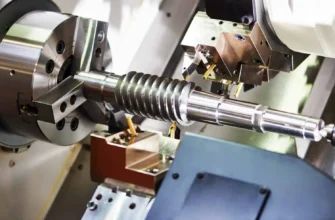
- Threading: Produces helical grooves on the surface of a workpiece to create external or internal threads. This operation requires precise control of the leadscrew and carriage feed. It’s a critical process for many functional parts, meeting specific customer requests for fastener compatibility.
Advanced Lathe Operations
Once fundamental operations are mastered, more complex techniques can be employed:
- Taper Turning: Creates a conical shape on the workpiece. This can be achieved by swiveling the compound rest to the desired angle or by using a taper attachment.
- Grooving/Parting Off: Creates a recess or cuts the workpiece completely from the stock. A narrow cutting tool is fed radially into the workpiece. Careful calculation of feed and speed is essential to prevent tool breakage and ensure a clean cut.
- Eccentric Turning: Involves machining a feature that is not concentric with the main axis of rotation. This often requires special fixturing or multi-jaw chucks and precise setup steps.
- Chamfering and Filleting: Creates angled edges (chamfers) or rounded corners (fillets) to remove sharp edges and improve stress distribution. These are often finishing steps that enhance the overall performance and aesthetics of a part.
Process Optimization for Lathe Machining
Optimizing lathe operations is key to improving performance, reducing costs, and ensuring consistent quality. This involves fine-tuning several parameters:
- Speeds and Feeds: The rotational speed of the workpiece (surface speed) and the rate at which the cutting tool advances (feed rate) directly impact cutting efficiency, tool life, surface finish, and heat generation. These parameters are often determined by the material being cut, the tool material, and the desired finish. Accurate calculations are crucial for achieving optimal performance.
- Depth of Cut: The amount of material removed by the cutting tool in a single pass. A larger depth of cut removes material faster but can increase tool wear and put more stress on the machine.
- Cutting Fluids: The use of coolants and lubricants helps to dissipate heat, reduce friction, flush away chips, and improve surface finish. Selecting the correct cutting fluid for the material and operation is vital.
- Tool Geometry: The angles and shape of the cutting tool significantly influence its cutting action, chip formation, and tool life. Understanding how to select or grind tools for specific Applications is a hallmark of an experienced machinist.
- Workholding: Secure and accurate clamping of the workpiece is essential for preventing vibration, ensuring concentricity, and achieving precise dimensions. Poor workholding leads to reduced performance and potential part rejection.
Troubleshooting Common Lathe Machining Issues
Even experienced machinists encounter challenges. Identifying and resolving common issues efficiently minimizes downtime and rework.
- Chatter/Vibration: Often caused by a loose workpiece, dull tooling, incorrect speeds/feeds, or a worn machine. Solutions include tightening the workpiece, using a sharp tool, adjusting speeds/feeds, or employing damping techniques. This significantly impacts surface finish and customer satisfaction.
- Poor Surface Finish: Can result from dull tools, incorrect cutting fluid, excessive feed rates, or improper tool geometry. Sharpening tools, adjusting parameters, or using a different cutting fluid can resolve this.
- Tool Breakage: Typically caused by excessive depth of cut, too high a feed rate, a weak workpiece setup, or a flawed tool. Reviewing operating parameters and ensuring a rigid setup are key preventative steps.
- Inaccurate Dimensions: May stem from tool wear, improper tool setting, machine backlash, or poor measurement techniques. Recalibration, tool replacement, and precise measurement are necessary. This directly affects meeting customer requests.
- Overheating: Can be caused by insufficient cutting fluid, too high a cutting speed, or excessive depth of cut. Increase coolant flow, reduce speed, or decrease depth of cut.
The Art and Science of Lathe Tooling
Lathe tooling is not merely an accessory; it is the active agent of transformation. The selection, application, and maintenance of cutting tools and workholding devices are critical to achieving desired performance, precision, and efficiency.
Understanding Lathe Cutting Tools
Cutting tools are designed to shear material from the workpiece. Their effectiveness depends on their material, geometry, and how they are applied.
- Tool Materials:
- High-Speed Steel (HSS): Relatively inexpensive and easy to grind, suitable for softer materials and slower cutting speeds.
- Carbide: Significantly harder and more heat-resistant than HSS, allowing for higher cutting speeds and longer tool life. Commonly used for steel, cast iron, and other metals.
- Ceramics: Extremely hard and wear-resistant, used for high-speed machining of hardened steels and alloys.
- Cubic Boron Nitride (CBN) & Polycrystalline Diamond (PCD): The hardest known materials, reserved for specialized applications like machining very hard metals or non-ferrous alloys at high speeds.
- Tool Geometry:
- Rake Angles (Back and Side): Affect chip formation and cutting force. Positive rake angles reduce cutting forces and improve chip flow, while negative rake angles increase edge strength.
- Clearance Angles (End and Side): Prevent the tool flank from rubbing against the workpiece, reducing friction and heat.
- Nose Radius: The radius at the tip of the cutting tool. A larger nose radius can improve surface finish and tool life for turning operations but increases cutting forces.
Tool Holders and Workholding Strategies
Securely holding both the workpiece and the cutting tool is fundamental to successful machining.
- Tool Holders: Devices that securely grip the cutting tool and mount it in the tool post. They ensure rigidity and proper positioning. Common types include square tool posts for manual lathes and specialized holders for CNC machines.
- Workholding Devices:
- Chucks: The most common method for holding cylindrical workpieces. Three-jaw chucks provide quick, accurate gripping for most applications, while four-jaw chucks offer independent jaw adjustment for irregularly shaped or off-center work.
- Collets: Spring-loaded sleeves that grip the workpiece with high precision and concentricity, ideal for smaller diameter stock and Swiss-type lathes.
- Centers: Used in conjunction with the headstock and tailstock to support long workpieces for turning.
- Faceplates: Flat discs mounted on the spindle, used for holding large, irregularly shaped workpieces.
- Fixtures: Custom-designed devices for holding specific parts or performing unique operations, often essential for specialized Applications and achieving stringent customer requests.
Strategic Tool Selection for Specific Operations
The choice of cutting tool and workholding is dictated by the operation, material, and desired outcome.
- Facing: Requires tools with a large side cutting edge angle and sufficient clearance. For internal facing, boring tools are used.
- Turning: Varies based on roughing or finishing. Roughing tools are robust, designed for high material removal rates. Finishing tools have smaller nose radii and sharper edges for superior surface finish.
- Threading: Specialized threading tools with specific thread forms are used. The feed rate must precisely match the leadscrew pitch.
- Grooving/Parting: Narrow tools with sufficient strength are required. The depth of cut and feed rate are critical to avoid binding and ensure a clean separation.
- Materials: Softer materials like aluminum can be machined with HSS or carbide tools at higher speeds. Harder materials like stainless steel or titanium require tougher carbide grades or specialized ceramic inserts and slower speeds.
Tool Wear, Maintenance, and Management
Tool wear is inevitable, but proactive management extends tool life, improves performance, and reduces operational costs.
- Monitoring Wear: Regularly inspect tools for chipping, flank wear, cratering, and signs of plastic deformation.
- Sharpening and Reconditioning: HSS tools can be ground to restore their cutting edges. Carbide inserts typically have multiple cutting edges that can be indexed to a new one when worn, or the entire insert is replaced.
- Inventory Management: Maintaining an adequate stock of essential tooling prevents production delays. Implementing a system for tracking tool usage and replacement is part of good organizational programs.
- Tool Life Prediction: Understanding the factors that affect tool life allows for more accurate planning and cost estimation for machining Applications. This data can be invaluable for performance analysis.
- Preventative Maintenance: Proper handling, storage, and cleaning of tools prevent premature damage.
Precision and Quality Control in Lathe Machining
Achieving the required dimensions and surface finishes is the hallmark of quality lathe machining. Rigorous measurement and adherence to quality assurance protocols are non-negotiable.
Essential Measurement Tools and Techniques
Accurate measurement is the foundation of precision machining, ensuring that parts meet customer requests and specifications.
- Calipers: Used for measuring external and internal diameters, depths, and step differences. Vernier, dial, and digital calipers offer increasing levels of precision.
- Micrometers: Provide highly accurate measurements of external dimensions, typically to within 0.0001 inches (0.0025 mm).
- Dial Indicators and Test Indicators: Used to measure runout, flatness, and parallelism. They are essential for precise setup and alignment.
- Bore Gauges: Used for accurately measuring the diameter of internal bores and holes.
- Radius Gauges and Thread Gauges: Specialized tools for checking radii and thread forms.
- Optical Comparators and Coordinate Measuring Machines (CMMs): Advanced metrology equipment used for detailed inspection of complex geometries and tight tolerances, often employed for critical Applications or first-piece inspection.
Geometric Dimensioning and Tolerancing (GD&T) for Turned Parts
GD&T is a symbolic language used on engineering drawings to define the allowable variations in the form, orientation, location, and profile of features on a part. For turned parts, critical GD&T elements include:
- Diameter Tolerances: Applied to cylindrical features, defining the acceptable range for diameters.
- Concentricity/Runout: Ensures that features share a common axis or are within a specified deviation from a common axis. Crucial for rotating parts or parts that mate with other rotating components.
- Perpendicularity/Parallelism: Ensures that faces are perpendicular to the axis of rotation or parallel to a reference plane.
- Flatness: Controls the variation across a surface, ensuring a true planar surface.
- Profile Tolerances: Control the allowable variation across a complex 2D or 3D profile, essential for non-cylindrical features or contours on turned parts.
Understanding GD&T is vital for machinists to interpret drawings correctly and for quality inspectors to verify that parts meet design intent. This ensures that components will function correctly in their intended Applications and satisfy customer needs.
Implementing Quality Assurance Protocols for Lathe Work
Quality assurance (QA) involves a systematic approach to ensuring that products consistently meet specified requirements.
- In-Process Inspection: Regularly checking critical dimensions and features during the machining process. This allows for early detection and correction of errors, preventing the production of scrap parts and improving overall performance.
- First-Piece Inspection: A thorough inspection of the first part produced from a new setup or program. This verifies the accuracy of the setup and programming before proceeding with the entire batch.
- Final Inspection: A comprehensive check of the finished part against all specifications, including dimensional, visual, and functional requirements.
- Documentation: Maintaining detailed records of inspections, measurements, and any adjustments made. This documentation is crucial for traceability, problem-solving, and continuous improvement.
- Calibration: Regularly calibrating all measurement instruments to ensure their accuracy and reliability.
- Continuous Improvement Programs: Analyzing inspection data and production performance to identify areas for improvement in processes, tooling, or machine controls. This iterative approach drives higher quality and better customer satisfaction.
The Lathe in the Modern Era: Technology & Automation
The traditional lathe has evolved dramatically with the integration of advanced technologies, transforming its capabilities and applications.
The Evolution and Impact of CNC Lathes
Computer Numerical Control (CNC) has revolutionized lathe machining. CNC lathes are programmed with digital instructions, allowing for:
- High Precision and Repeatability: Eliminating human variability, ensuring every part is identical to the programmed specification, crucial for demanding Applications.
- Complex Geometries: Machining intricate shapes that would be impossible or prohibitively expensive with manual lathes.
- Increased Efficiency: Faster cycle times, automated tool changes, and reduced setup times lead to significant gains in performance.
- Flexibility: Easily adaptable to new programs and part designs with minimal physical retooling.
- Integration: Seamlessly connect with CAD/CAM software development for design and programming, and to broader manufacturing execution systems (MES).
The operating system of a CNC lathe manages intricate controls, coordinating axes, spindle speed, tool changes, and coolant flow. This sophisticated system allows for highly optimized machining programs.
Data-Driven Machining: Sensors, IoT, and Analytics
The advent of the Internet of Things (IoT) and advanced sensors is turning lathes into data-generating machines.
- Sensors: Monitor parameters like spindle vibration, tool wear, temperature, and power consumption in real-time.
- IoT Connectivity: Enables machines to communicate data wirelessly, often leveraging cloud infrastructure for storage and analysis.
- Predictive Maintenance: Analyzing sensor data can predict potential equipment failures before they occur, allowing for scheduled maintenance and preventing costly downtime. This improves overall equipment performance and reliability.
- Process Optimization: Data analytics can reveal hidden inefficiencies in machining processes, leading to adjustments in speeds, feeds, and tooling for improved performance and cost reduction.
- Quality Monitoring: Real-time data can provide insights into process stability and help identify deviations that might lead to defects, ensuring customer requests are met. These Studies inform better programming and operational goals.
Integration with CAM Software and Digital Workflows
Computer-Aided Manufacturing (CAM) software plays a vital role in modern lathe machining.
- Design to Machining: Engineers can design parts in CAD (Computer-Aided Design) software development, and then use CAM software to generate the optimal machining program (G-code) for CNC lathes.
- Toolpath Optimization: CAM software simulates the machining process, allowing for the optimization of toolpaths to minimize machining time, reduce tool wear, and improve surface finish.
- Digital Twin Technology: Creating virtual replicas of the lathe and its programs allows for testing and optimization in a digital environment before executing on the physical machine.
- Workflow Automation: Integration between CAD, CAM, ERP (Enterprise Resource Planning), and MES systems creates a seamless digital workflow, from initial customer request to final product delivery, enhancing organizational efficiency.
Future Trends in Lathe Machining
The field continues to evolve at an unprecedented pace:
- Advanced Automation and Robotics: Integration of robots for loading/unloading raw materials and finished parts, further automating the production cell.
- Artificial Intelligence (AI) and Machine Learning (ML): AI will be used for more sophisticated process optimization, real-time adaptive control, and advanced fault diagnosis.
- Additive Manufacturing Integration: Hybrid machines that combine additive (3D printing) and subtractive (lathe) capabilities will allow for the creation of highly complex parts in a single setup.
- Smart Factory Concepts: Lathes will be fully integrated components of smart factories, communicating with other machines and systems to achieve dynamic, self-optimizing production. This will drive new news in manufacturing efficiency and performance.
- Augmented Reality (AR) and Virtual Reality (VR): AR/VR will be used for training students and machinists, remote assistance, and machine setup visualization, transforming the user experience.
Real-World Applications Across Industries
The precision and versatility of lathe machining make it indispensable across a vast spectrum of industries, enabling the creation of components that drive innovation and functionality.
- Aerospace: Manufacturing critical engine components, landing gear parts, fasteners, and fuselage sections that demand extremely tight tolerances, exotic materials, and impeccable reliability. The accuracy of lathe operations is paramount for flight safety.
- Automotive: Producing engine crankshafts, camshafts, gears, shafts, brake rotors, and suspension components. Lathes are essential for mass production of high-quality automotive parts that meet rigorous performance standards.
- Medical Devices: Creating intricate surgical instruments, implants (like hip and knee replacements), prosthetics, and diagnostic equipment components. Biocompatibility and absolute precision are key customer requests. Swiss-type lathes are particularly prevalent here.
- Energy Sector: Machining components for power generation turbines, oil and gas exploration equipment, and hydraulic systems that must withstand extreme pressures and temperatures.
- Defense Industry: Producing precision parts for weaponry, vehicles, and advanced military systems where reliability and exact specifications are non-negotiable.
- General Manufacturing: From agricultural machinery to consumer electronics, lathes produce shafts, bushings, housings, and countless other components that are the backbone of everyday products.
- Prototyping and Custom Fabrication: Enabling rapid creation of unique parts for research and development, custom machine building, and specialized artistic Applications.
In each of these fields, the lathe’s ability to precisely shape materials to exact specifications is fundamental to the success of the final product and the satisfaction of the end customer.
Becoming a Master Machinist: Continuous Learning and Growth
Mastery of lathe machining is a journey of continuous learning, skill refinement, and adaptation. It extends beyond technical proficiency to encompass problem-solving, critical thinking, and effective interaction.
- Foundational Education: Understanding the theoretical underpinnings taught in vocational schools and technical institutions provides a strong starting point. Academic Studies on metallurgy, mechanics, and manufacturing processes are invaluable for deeper comprehension.
- Hands-On Practice: Consistent practice on various machines and with different materials is essential. Each successful operation and resolved issue builds experience.
- Tooling and Material Science Expertise: A deep understanding of tool performance characteristics and material behaviors allows for informed decisions that optimize efficiency and quality.
- Problem-Solving Skills: Developing the ability to diagnose issues, whether mechanical, operational, or related to material properties, is crucial for maintaining performance.
- Adapting to New Technologies: Embracing CNC, automation, and digital manufacturing tools is no longer optional but a requirement for staying relevant. This involves learning new controls, software development principles, and data analysis techniques.
- Communication and Customer Service: Effective communication with supervisors, colleagues, and especially customers is vital. Understanding customer requests, providing clear updates, and managing expectations contribute to successful project outcomes and strong business relationships. Good customer service ensures repeat business and positive reputation.
- Safety Culture: A commitment to safety must be ingrained. It is not just a set of rules but a proactive mindset that protects oneself and others.
- Continuous Learning Programs: Participating in workshops, webinars, and industry news updates keeps machinists abreast of the latest trends and techniques. Learning programs offered by manufacturers or industry associations are excellent resources.
- Mentorship: Learning from experienced machinists provides invaluable practical insights and guidance that textbooks cannot fully replicate.
The role of the machinist is evolving from a manual operator to a skilled technician and problem-solver who leverages advanced technology to achieve precise manufacturing goals.
What’s Next?
You have now navigated the comprehensive landscape of lathe machining, from its fundamental mechanics and operations to its sophisticated modern applications and the path to becoming a master machinist. We’ve covered the essential components of lathes, the critical steps involved in various operations, the strategic importance of tooling, and the non-negotiable aspects of precision and quality control. Furthermore, we explored the transformative impact of CNC technology, data analytics, and digital workflows, underscoring how these advancements drive performance and efficiency across industries.
You have gained insights into how lathe machining directly contributes to achieving business goals and meeting diverse customer requests, emphasizing the importance of effective organization and customer service. The integration of electronics, software development, and advanced operating systems has been highlighted, illustrating the path towards a fully automated and data-driven manufacturing future, influenced by ongoing Studies and emerging news.
Your Next Steps:
- Deep Dive into Specific Operations: If you are new to machining, focus on practicing fundamental operations like facing, turning, and drilling on a manual lathe. For those familiar, explore more advanced Applications like threading or taper turning.
- Explore CNC Programming: If you are interested in modern manufacturing, begin learning G-code and M-code. Experiment with CAM software development to generate toolpaths and understand the intricacies of CNC controls.
- Prioritize Safety: Continuously reinforce safety protocols. Make safety checks a routine part of every program and operation.
- Understand Your Materials: Familiarize yourself with the machining properties of different metals and plastics you will be working with. This knowledge is key to optimizing speeds, feeds, and tool selection.
- Invest in Measurement Tools: Acquire and learn to use essential measurement tools like calipers and micrometers. Practice taking accurate measurements and understanding GD&T principles.
- Stay Informed: Follow industry news, attend trade shows (virtually or in person), and engage with online machining communities to stay updated on the latest technologies, tools, and best practices. Consider enrolling in advanced programs at a local institution or through online learning platforms.
- Seek Practical Experience: The best way to master lathe machining is through hands-on experience. Seek opportunities to work with machines, collaborate with experienced machinists, and tackle real-world Applications.
By diligently applying the knowledge gained from this guide, you are well on your way to mastering lathe machining and contributing significantly to the success of your endeavors. The journey of a machinist is one of constant learning and adaptation, ensuring relevance and excellence in the dynamic world of manufacturing.