Unveiling the Power of Kellering in Modern Machining
In the intricate world of modern manufacturing, precision, efficiency, and the longevity of tooling are paramount. As industries continually push the boundaries of what’s possible, the demand for sophisticated machining techniques that can tackle complex geometries and exotic materials grows ever stronger. This guide will demystify one such advanced approach: Kellering. You will learn what Kellering truly means, understand its underlying principles and the philosophy that drives its application, and discover its vital role in contemporary manufacturing. By the end of this article, you will gain a comprehensive understanding of Kellering’s significance, its practical applications, and why mastering this technique is crucial for staying competitive in a rapidly evolving manufacturing landscape. To effectively grasp the concepts presented, a foundational understanding of CNC machining principles and terminology is beneficial. By the end of this guide, you will be equipped to recognize the strategic value of Kellering and its impact on producing high-quality parts with unparalleled efficiency.
A. Hook: Beyond basic milling – understanding a strategic machining approach
Traditional milling techniques, while foundational, often encounter limitations when faced with the complex three-dimensional contours and demanding material requirements of modern components. These limitations can manifest as inefficient material removal, accelerated tool wear, surface finish compromises, and the pervasive issue of chatter and vibration. Recognizing these inherent challenges has spurred the development of more intelligent and strategic machining methodologies. Kellering represents a significant evolution beyond conventional roughing and finishing operations, embodying a proactive approach to material removal that prioritizes predictable tool engagement, optimized chip loads, and controlled cutting forces. It moves beyond simply removing material to intelligently sculpting complex surfaces.
B. What is Kellering? A brief, high-level overview
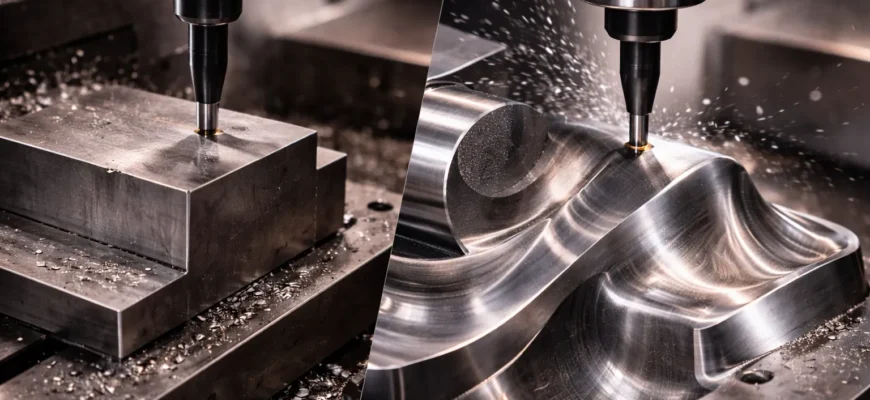
 Figure 1: A comparison of toolpaths. Traditional milling (left) often involves abrupt changes in direction and inconsistent tool load, while Kellering (right) uses a smooth, continuous path to maintain constant engagement, reducing tool wear and improving surface finish.
At its core, Kellering is a specialized form of 3D contoured surface milling. It’s a technique designed to efficiently and precisely machine complex, non-prismatic shapes, often found in components like turbine blades, impellers, and complex molds. Unlike traditional methods that might mill a part in discrete 2.5D layers or follow less optimized toolpaths, Kellering focuses on maintaining a constant and controlled engagement between the cutting tool and the workpiece. This continuous, predictable interaction is the key to its superior performance, leading to smoother cutting action, reduced stress on the tool, and enhanced material removal rates.
C. The article’s purpose: Defining, demystifying, and demonstrating the significance of Kellering
This article aims to provide a thorough exploration of Kellering. We will delve into its precise definitions, uncover the historical context behind its meaning, and dissect the core principles that differentiate it from other machining techniques. Furthermore, we will examine the strategic philosophy and the profound significance Kellering holds for modern manufacturing. Through detailed explanations and real-world examples, we will demonstrate its practical application and the tangible benefits it delivers, thereby demystifying this powerful machining approach and highlighting its importance in achieving manufacturing excellence.
D. Why this topic matters: Enhancing precision, efficiency, and tool life in manufacturing
The import of Kellering in today’s manufacturing environment cannot be overstated. The global precision machining market was valued at USD 106.6 Billion in 2023 and is projected to reach USD 216.8 Billion by 2032, growing at a compound annual growth rate (CAGR) of 8.23% from 2024-2032 [SNS Insider, 2025]. This burgeoning market underscores the increasing demand for sophisticated machining processes. Kellering directly addresses the critical problems of inefficiency and tooling costs. By enabling higher material removal rates, significantly extending tool life, and improving surface finish, it offers concrete solutions that directly impact a manufacturer’s bottom line and competitive edge. It represents a strategic investment in optimizing both production output and the quality of finished parts.
Defining Kellering: Precision, Meaning, and Core Principles
Understanding the precise definition and underlying principles of Kellering is fundamental to appreciating its strategic value. This section unpacks the term, its historical roots, and the core concepts that make it a distinct and powerful machining approach.
A. The Literal Definition: What “Kellering” Means
Literally, “Kellering” refers to a specific method of machining, primarily associated with the sophisticated control of a cutting tool’s path in three-dimensional space. It involves generating toolpaths that allow the tool to maintain a consistent, optimized engagement with the material as it moves across the workpiece. This method is particularly adept at milling complex contoured surfaces, ensuring that the cutting tool is always engaged in a predictable manner, thereby maximizing material removal efficiency and minimizing the stresses that can lead to tool breakage or poor surface finish. The meaning is rooted in controlled, continuous, and strategic interaction.
B. The Genesis of the Term: The “Keller Legacy” and its Historical Context
The term “Kellering” is intrinsically linked to the pioneering work of the Keller Machine Company, founded by Hans W. Keller. In the mid-20th century, Keller machines were revolutionary for their ability to perform intricate, multi-axis, 3D contouring operations. These machines were at the forefront of developing the complex mechanical and control systems that enabled machines to follow smooth, curved toolpaths with high accuracy. While the specific company may no longer exist, the legacy of their innovation lives on in the machining techniques that bear their name. The words associated with this process are, therefore, a nod to the historical context of advanced 3D milling, tracing back to the advancements made by Keller. It’s a historical footnote that has become a technical term, a unique facet of machining vocabulary. A brief look at etymology, similar to what one might find in a Merriam-Webster dictionary, reveals how specific names become synonymous with pioneering technologies.
C. Understanding the “Meaning” of Kellering in a Machining Context
In a machining context, the meaning of Kellering transcends a mere technical definition; it signifies a paradigm shift in how complex surfaces are approached. It implies an intention to move away from the limitations of traditional, often less predictable, machining techniques. Instead of layering 2D operations or employing simpler, more general-purpose strategies, Kellering embodies a deliberate strategy to engage the material in the most efficient and controlled manner possible. It means sculpting surfaces with continuous, high-speed, and precise tool movements, ensuring that each pass contributes optimally to the final geometry and finish of the parts. The interpretation of Kellering is that of intelligent, adaptive machining.
D. Key Principles: Why Kellering Stands Apart
The distinctiveness of Kellering lies in a set of core principles that govern its practical application. These principles are not just operational guidelines; they form the foundational philosophy that underpins its success.
D.1. Constant Tool Engagement: The fundamental concept for optimal material removal
Perhaps the most critical principle of Kellering is maintaining constant tool engagement. Traditional milling often involves tools entering and exiting the material, leading to intermittent cutting forces, shock loads, and inefficient material removal. Kellering strategies, often employing trochoidal or dynamic milling paths, ensure that the cutting tool is always engaged with the material in a predictable and controlled manner. This consistent interaction allows for smoother cutting, reduced vibration, and a more stable machining process, directly contributing to better surface quality and extended tool life. This constant engagement is a cornerstone solution to many problems encountered in conventional machining.
D.1.1. The “Why”: Solving the Inefficiencies of Traditional Roughing
Traditional roughing operations often suffer from issues like deep radial cuts, which cause excessive heat and wear, or shallow radial cuts, which are inefficient. Constant tool engagement in Kellering addresses these problems by maintaining an optimal, typically shallow, radial engagement. This ensures that heat is efficiently dissipated through the chip and away from the cutting edge, and that the cutting forces remain consistent and manageable. The intention is to achieve more material removed per tool engagement cycle.
D.2. Optimized Chip Load: Ensuring consistent and efficient cutting
Closely related to constant engagement is the principle of maintaining an optimized chip load. The chip load refers to the thickness of the material removed by each tooth of the cutting tool on each revolution. In Kellering, toolpaths are designed to ensure this chip load remains consistent throughout the cutting operation. This consistency is crucial for several reasons: it prevents overloading of individual cutting edges, reduces the likelihood of chip recutting (which can damage the tool and surface finish), and ensures predictable thermal management at the cutting zone. An optimized chip load directly translates to more efficient material removal and prolonged tool life, a key benefit.
D.3. Controlled Radial Engagement: Minimizing stress and maximizing tool life
Controlled radial engagement refers to how much of the tool’s diameter is actively cutting into the workpiece at any given moment. Kellering strategies prioritize keeping this engagement relatively small and consistent, typically between 5% and 40% of the tool diameter, depending on the material and tooling. This shallow radial engagement, combined with a significant axial depth of cut, is a hallmark of High-Speed Machining (HSM) techniques that are integral to Kellering. Minimizing radial stress prevents premature tool wear, chipping, and breakage, thereby dramatically extending the useful life of expensive cutting tools and reducing operational costs. This principle is a direct solution to common tooling problems.
D.4. High-Speed Machining Integration: Leveraging modern capabilities
Kellering is intrinsically linked to High-Speed Machining (HSM) capabilities. HSM involves utilizing higher spindle speeds and feed rates to achieve greater material removal rates and improved surface finishes. The principles of constant tool engagement and controlled radial engagement are essential for safely and effectively implementing HSM. By using specialized toolpaths and carefully controlled parameters, Kellering leverages the power of modern CNC machines and tooling to achieve levels of productivity and precision that were previously unattainable. This integration represents a forward-thinking approach to practical work.
The Philosophy and Strategic Significance of Kellering
Kellering is more than just a set of machining parameters; it represents a distinct philosophy and holds significant strategic importance for manufacturers aiming for peak performance. This section explores the deeper meaning and impact of adopting Kellering.
A. Kellering as a Machining Philosophy: Beyond a Mere Technique
Viewing Kellering as a philosophy underscores its transformative potential. It signifies a shift in mindset from a reactive approach to material removal to a proactive, intelligent strategy. This philosophy is driven by the understanding that optimal machining is not just about the machine’s capabilities but about how the cutting tool interacts with the material in a controlled and predictable manner. It’s about maximizing the inherent capabilities of advanced CNC machinery and tooling through intelligent programming and execution. The intention behind this philosophy is to achieve superior results consistently.
A.1. The “Why”: Solving the Inefficiencies of Traditional Roughing
The underlying philosophy of Kellering directly addresses the inherent inefficiencies and problems of traditional roughing techniques. Older methods often involve large depths of cut and substantial radial engagement, leading to excessive heat generation, significant tool wear, and a higher risk of chatter and vibration. This results in slow material removal rates and frequent tool changes. Kellering provides a powerful solution by employing strategies that prioritize constant, controlled engagement, leading to vastly improved efficiency and reduced operational costs.
A.2. Focus on “Pragmatic Solutions”: Achieving optimal results with smart strategies
Kellering champions pragmatic solutions to real-world manufacturing challenges. It’s not about employing overly complex or theoretical methods for their own sake. Instead, it focuses on practical, implementable strategies that yield tangible benefits. The practical application of Kellering’s principles leads to direct improvements in productivity, tool life, and part quality. This focus on actionable solutions makes it an invaluable asset for manufacturers seeking to enhance their operational efficiency and output.
B. Deconstructing the “Semantics” and “Import” of the Kellering Approach
The semantics surrounding Kellering, including its historical lineage and the words used to describe its related techniques, offer insight into its fundamental import. Terms like “dynamic milling” or “adaptive clearing” are often used interchangeably or as components of a broader Kellering strategy. While these terms might seem like mere synonyms, they each capture a facet of the core concept: intelligently adapting the toolpath to maintain optimal cutting conditions.
B.1. How the Term Reflects its Function: A “Vocabulary” for Advanced Machining
The very name “Kellering” evokes a specific set of machining actions and outcomes associated with advanced 3D contouring. The vocabulary associated with it – terms like trochoidal, constant radial engagement, and optimized chip load – precisely describes the functional aspects of this technique. Understanding these words and their precise meaning is crucial for programmers and operators to effectively implement the strategy. The import of this precise language lies in its ability to clearly communicate complex machining concepts and intentions.
C. Core Intentions and Benefits
The adoption of Kellering is driven by several core intentions, each yielding significant benefits for the manufacturing process and the final product.
C.1. Enhanced Material Removal Rates: Getting more done faster
One of the primary intentions behind Kellering is to significantly increase material removal rates (MRR). By maintaining constant tool engagement and optimized chip loads, manufacturers can feed tools through materials much faster than with traditional methods. This leads to a dramatic reduction in cycle times for parts, allowing for higher production volumes. In some cases, MRR increases of 50% or more can be achieved, especially in materials like aluminum and titanium.
C.2. Extended Tool Life: Reducing costs and downtime
A significant operational problem in machining is the cost and downtime associated with tool replacement. Kellering directly addresses this by distributing cutting forces evenly, minimizing heat build-up at the cutting edge, and avoiding shock loads. This results in substantially longer tool life, sometimes by 50-100% or more. The reduced frequency of tool changes translates into less machine downtime and lower tooling expenditures.
C.3. Superior Surface Finish: Laying the groundwork for quality
The consistent and smooth cutting action inherent in Kellering leads to significantly improved surface finishes on machined parts. By minimizing chatter and vibration, and by ensuring a predictable chip load, the surface quality can be exceptionally high, often achieving Ra values of 0.4 µm or better. This superior finish can reduce or eliminate the need for secondary finishing operations like grinding or polishing, saving time and resources.
C.4. Reduced Vibrations and Chatter: Addressing “Vibroacoustic Response” proactively
Chatter and vibration are pervasive problems that degrade surface finish, reduce tool life, and can even damage machinery. Kellering’s philosophy is to proactively manage the “vibroacoustic response” of the machining system. By maintaining stable cutting conditions through constant engagement and controlled forces, Kellering inherently suppresses the conditions that lead to chatter. This results in a quieter, more stable machining process, which is critical for achieving high-precision components. This proactive approach is a key solution for complex machining tasks.
Kellering in Practice: Core Techniques and How it Works
Translating the philosophy of Kellering into actual machining operations involves specific techniques and a deep understanding of how to implement them. This section details the practical aspects of Kellering, focusing on software, toolpaths, and critical parameters.
A. The Role of CAM Software in Implementing Kellering Strategies
Computer-Aided Manufacturing (CAM) software is indispensable for implementing Kellering strategies. It translates the design data of a part into machine-readable toolpaths. Modern CAM systems offer advanced algorithms specifically designed to generate the types of intricate and optimized paths required for Kellering. The software acts as the bridge between the designer’s intention and the machine’s practical application.
A.1. Generating Optimized Toolpaths: Algorithms for efficiency
CAM software employs sophisticated algorithms to create Kellering toolpaths. These algorithms are designed to calculate the most efficient way for the cutting tool to engage the material, ensuring constant tool contact and optimized chip loads. Techniques like trochoidal milling and dynamic milling are built directly into CAM packages, allowing programmers to select these strategies and have the software generate the necessary complex movements. This automation is crucial for achieving the precision and efficiency demanded by Kellering. The knowledge of how to select and utilize these algorithms is a key practical skill.
B. Key Technical Elements of Kellering Toolpaths
The effectiveness of Kellering relies heavily on the specific characteristics of the generated toolpaths. These paths are meticulously designed to fulfill the core principles of constant engagement and controlled radial immersion.
B.1. Trochoidal Milling: A cornerstone technique
Trochoidal milling is a fundamental technique within Kellering. It involves the tool moving in a circular or looped path while simultaneously advancing linearly along the desired contour. This creates a “rolling” action of the cutting edge, allowing for a relatively large axial depth of cut with a shallow radial engagement. This combination is highly effective for removing material quickly and efficiently, especially in tough materials, by managing heat and stress. It provides a robust solution to material removal challenges.
B.2. Dynamic Milling / Adaptive Clearing: Intelligent path generation
Dynamic milling or adaptive clearing represents an evolution of trochoidal milling, often found in modern CAM systems. These strategies use intelligent algorithms to continuously monitor and adjust the tool’s engagement based on the geometry of the part and the material being cut. The toolpath adapts in real-time (during programming) to maintain consistent chip load and radial engagement, even in areas where the geometry changes abruptly. This adaptive nature makes it a highly efficient and versatile technique for achieving Kellering’s objectives. It’s a direct manifestation of the philosophy of intelligent machining.
B.3. Helical Entry and Exit: Minimizing impact
To ensure smooth transitions into and out of the material, Kellering strategies often incorporate helical entry and exit paths. Instead of plunging directly into the material (which can shock the tool), the tool enters the cut in a helical motion. This gradually introduces the tool into the material, minimizing impact and contributing to the overall stability and longevity of the cutting process. This is a crucial detail for successful practical application.
C. Critical Machining Parameters
Beyond the toolpath geometry, optimizing specific machining parameters is vital for successful Kellering. This requires deep knowledge and careful consideration of several factors.
C.1. Spindle Speed and Feed Rate: The heart of HSM
Achieving the benefits of Kellering, especially when integrated with High-Speed Machining (HSM), requires high spindle speeds and corresponding feed rates. The intention is to maintain an optimal chip load by advancing the tool quickly enough to remove material efficiently. However, these parameters must be carefully balanced with the material properties, tooling capabilities, and machine rigidity to avoid excessive forces or vibrations. Finding the sweet spot is key to efficient practical work.
C.2. Depth of Cut (Axial and Radial): Achieving balance
While radial engagement is kept shallow, Kellering often allows for significantly deeper axial depths of cut compared to traditional methods. This allows the tool to engage more of its flute length in the material, leading to more efficient material removal per pass. The practical balance between axial and radial depth of cut is critical for maximizing productivity without compromising tool life or surface finish.
C.3. Tooling Selection: The right tool for the job
The selection of appropriate tooling is paramount for Kellering. High-performance solid carbide end mills with advanced coatings are typically used, designed for high-speed applications and specific materials. Features like variable helix and variable indexing can help break up harmonics and reduce vibration. The choice of tool geometry, diameter, and flute count directly influences the achievable cutting parameters and the overall success of the Kellering strategy.
Kellering vs. Standard Milling: A Comparative Analysis for Strategic Advantage
Understanding how Kellering differentiates itself from standard milling techniques is crucial for making informed decisions about process selection. This comparative analysis highlights the problems solved by Kellering and its strategic significance.
A. Traditional Roughing: Limitations and Challenges
Traditional roughing techniques often involve aggressive engagement strategies that can lead to several problems:
- Inconsistent Tool Engagement: Tools entering and exiting material abruptly create shock loads, leading to increased tool wear and potential chipping.
- Deep Radial Engagement: This generates significant heat and stress, reducing tool life and potentially causing workpiece distortion.
- Inefficient Material Removal: Shallow radial cuts or poorly optimized paths result in slower material removal rates and longer cycle times.
- Increased Vibration and Chatter: Unstable cutting conditions degrade surface finish and can necessitate additional finishing passes.
- Higher Tool Costs: Frequent tool breakage and wear lead to increased expenditure on cutting tools.
B. The Distinct Advantages of Kellering
Kellering offers a clear set of advantages that directly address the limitations of traditional methods, making it a strategic choice for many applications.
- Constant, Controlled Engagement: Ensures smooth cutting, reduced stress, and predictable machining.
- Optimized Chip Load: Maximizes material removal efficiency and extends tool life by preventing overload.
- Shallow Radial, Deep Axial Engagement: Enables faster material removal while managing heat and tool forces.
- Reduced Vibrations and Chatter: Leads to superior surface finish and improved part quality.
- Extended Tool Life: Significantly reduces tooling costs and machine downtime.
- Increased Productivity: Dramatically cuts down cycle times for complex parts.
C. When to Choose Kellering
Kellering is not a universal replacement for all milling operations, but its strategic import becomes apparent in specific scenarios:
- Machining Complex 3D Contours: For components with intricate, freeform surfaces such as impellers, blisks, or molds, Kellering excels.
- Working with Difficult-to-Machine Materials: Materials like titanium, Inconel, and hardened steels benefit greatly from Kellering’s controlled engagement and heat management capabilities.
- Reducing Cycle Times: When rapid material removal is a priority, Kellering offers a significant advantage.
- Improving Surface Finish: For applications requiring exceptionally smooth finishes directly from the mill, Kellering is an ideal choice.
- Extending Tool Life and Reducing Costs: When tooling expenditure and downtime are significant concerns, Kellering provides a viable solution.
The decision to employ Kellering is a strategic one, based on the geometry of the part, the material properties, production volume targets, and the desired quality outcomes. It represents a deliberate choice to invest in advanced techniques for superior results.
Real-World Applications of Kellering: Where Precision Meets Performance
The practical implementation of Kellering spans across numerous high-demand industries, showcasing its versatility and effectiveness in producing critical parts.
A. Aerospace and Defense
In the aerospace sector, the need for high-strength, lightweight, and precisely machined components is paramount. Kellering is extensively used for manufacturing complex parts such as:
- Turbine Blades and Impellers: The intricate aerodynamic contours of these components require multi-axis machining, where Kellering’s ability to precisely sculpt complex 3D surfaces is invaluable.
- Blisks (Blade Disks): Machining these integrated components demands high accuracy and efficiency, making Kellering a go-to technique.
- Structural Components: Machining large, complex structural aerospace parts from materials like titanium alloys benefits greatly from Kellering’s efficiency and tool life extensions. The practical application here directly contributes to aircraft performance and safety.
B. Automotive Industry
The automotive industry, particularly in high-performance and electric vehicle sectors, relies on precision machining for critical engine and drivetrain components. The automotive industry held a major share in the precision machining market, accounting for 26.9% of the market share in 2024 [Custom Market Insights, 2026].
- Combustion Chambers and Cylinder Heads: Kellering can precisely machine the complex geometries of these components to optimize performance and efficiency.
- Transmission Components: High-precision gears and housings requiring tight tolerances and excellent surface finishes are ideal candidates for Kellering.
- Electric Vehicle Powertrain Components: The increasing demand for complex motor housings and battery components benefits from the efficiency and precision offered by Kellering.
C. Die and Mold Manufacturing
The creation of complex molds for plastic injection molding, die casting, and forging often involves machining intricate cavities and cores.
- Complex Mold Cavities: Kellering allows for the efficient machining of detailed features, ensuring high surface quality and accuracy required for mold production. This minimizes post-machining work and reduces lead times.
- Large Industrial Molds: For large, complex molds, Kellering offers significant advantages in terms of material removal speed and surface finish quality.
D. Medical Implants and Devices
The medical field demands the highest levels of precision and material integrity.
- Complex Prosthetics and Implants: Components like hip and knee replacements often feature intricate geometries that require precise multi-axis machining, where Kellering can ensure both accuracy and biocompatible surface finishes. The intention here is to produce patient-specific, high-quality implants.
In each of these sectors, Kellering provides the solutions to manufacturing problems that would be difficult or impossible to overcome with traditional machining techniques. The practical skills of programmers and operators are essential to harnessing these benefits.
The Human Element: Skills, Knowledge, and Intent in Kellering
While advanced software and machinery are crucial, the successful implementation of Kellering ultimately relies on the human element – the knowledge, practical skills, and clear intention of the individuals involved.
A. The Knowledge Base
Successfully applying Kellering requires a solid understanding of several key areas:
- Machining Principles: A deep comprehension of cutting mechanics, material science, and tool wear mechanisms is essential.
- CAM Software Proficiency: Operators must possess expert knowledge of their chosen CAM software, understanding how to select and configure Kellering strategies, optimize toolpaths, and simulate machining processes.
- Machine Tool Capabilities: Understanding the rigidity, speed, and axis capabilities of the CNC machine is critical for safe and efficient operation.
- Material Properties: Different materials behave differently under cutting conditions. Knowledge of material characteristics—such as hardness, thermal conductivity, and machinability—is vital for parameter selection.
B. Practical Skills Required
Beyond theoretical knowledge, specific practical skills are necessary:
- Toolpath Strategy Selection: The ability to choose the most appropriate Kellering technique (e.g., trochoidal, adaptive) based on the part geometry and material.
- Parameter Optimization: Skillfully setting spindle speeds, feed rates, axial and radial depths of cut to achieve optimal results without compromising tool life or machine stability. This requires hands-on experience and iterative adjustments.
- Toolpath Simulation and Verification: The practical skill of meticulously reviewing simulated toolpaths to identify potential collisions, gouges, or inefficient movements before actual machining.
- Machine Operation and Monitoring: Experienced operators can interpret machine feedback, listen to the cutting process, and make real-time adjustments to ensure optimal performance and identify potential issues.
C. Interpreting Data and Intentions
Successful Kellering involves more than just executing programmed moves; it requires a nuanced interpretation of data and a clear understanding of the overarching intention.
- Interpreting Toolpath Logic: Understanding why a specific toolpath was generated by the CAM software and how it aims to achieve the desired outcome.
- Machine Data Interpretation: Analyzing data from the machine (e.g., spindle load, vibration sensors if available) to assess the cutting process and make informed decisions.
- Understanding the “Why”: The programmer’s and operator’s clear intention to achieve specific goals—such as maximum efficiency, extended tool life, or superior surface finish—drives the careful application of Kellering techniques. This focus on intention elevates the process from a mere set of instructions to a strategic approach.
The integration of advanced technology with skilled human oversight is what truly unlocks the potential of Kellering, transforming complex machining challenges into achievable manufacturing successes.
What’s Next?
This comprehensive guide has illuminated the intricate world of Kellering in machining, moving beyond a basic definition to explore its profound meaning, strategic philosophy, and critical practical applications. We have detailed the core principles—constant tool engagement, optimized chip load, and controlled radial engagement—that differentiate Kellering and offer tangible solutions to long-standing manufacturing problems. The historical context of the “Keller Legacy,” the import of specific vocabulary, and the strategic significance for enhancing material removal rates, extending tool life, and improving surface finish have all been examined.
You have learned how modern CAM software translates programming intentions into efficient toolpaths using techniques like trochoidal and dynamic milling, and the crucial role of understanding machining parameters and tooling selection. Furthermore, we have highlighted Kellering’s indispensable role across industries such as aerospace, automotive, and die/mold manufacturing, where it addresses complex geometric challenges and material demands. Crucially, the indispensable human element—the required knowledge, practical skills, and clear intention—has been emphasized as the key to unlocking Kellering’s full potential.
By grasping these concepts, you are now equipped to:
- Identify Opportunities: Recognize when Kellering is the optimal technique for a given machining task or component.
- Communicate Effectively: Understand the technical vocabulary and philosophy behind Kellering, enabling clearer communication with programmers, operators, and stakeholders.
- Evaluate Machining Strategies: Critically assess the benefits and drawbacks of Kellering compared to standard milling for specific applications.
- Appreciate the Role of Technology and Skill: Understand that successful Kellering is a synergistic blend of advanced software, capable machinery, and skilled human expertise.
Next Steps for Implementation and Further Learning:
- Explore Your CAM Software: Familiarize yourself with the specific Kellering or adaptive clearing modules within your organization’s CAM software. Practice generating toolpaths for sample parts.
- Seek Further Training: Invest in specialized training courses focused on advanced CAM strategies and High-Speed Machining (HSM) techniques.
- Consult Tooling and Machine Manufacturers: Engage with tooling suppliers and machine tool builders to understand their recommendations for Kellering applications and specific materials.
- Experiment with Controlled Parameters: On suitable test parts or materials, begin experimenting with Kellering techniques under controlled conditions, closely monitoring tool life and surface finish.
- Foster a Culture of Continuous Improvement: Encourage collaboration between design, programming, and machine operation teams to share knowledge and refine Kellering strategies for maximum efficiency and quality.
Embracing Kellering is an investment in a more precise, efficient, and competitive future for your manufacturing operations.