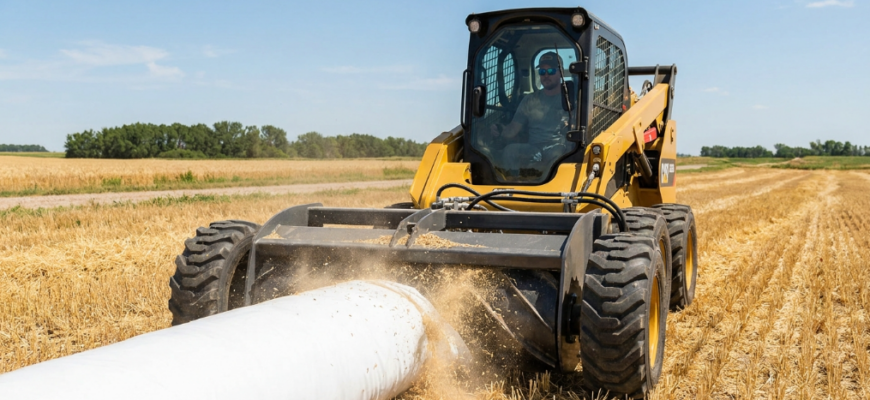
Still Burning Hours Cleaning Grain Bags Manually?
This page is your Grain Bag Roller Decision System—no fluff, no dealer brochures. You’ll know exactly when renting makes sense, when buying is worth it, which roller type fits your skid steer or tractor, and how to avoid overpaying.
What is a grain bag roller?
A grain bag roller is a hydraulic attachment that rolls used grain‑storage bags into tight, uniform bales for easy transport and recycling, saving hours of manual labor and reducing field cleanup time.
What does it do?
- Rolls 250–500‑ft grain bags into compact bales (roughly 3–4 ft wide by 6 ft high).
- Makes bags easy to load on trucks and haul to recycling centers or disposal sites.
- Reduces manual labor, field clutter, and environmental risk from scattered plastic.
Price range (new, 2025–2026)
- New grain bag rollers: Typically $11,000–$15,000+ depending on size, bale capacity, and brand.
- Used rollers: Often $6,000–$10,000, with prices dropping quickly for older or high‑use units.
Rental availability
- Daily rental rates in Canada and the U.S. commonly $50–$295/day for grain bag rollers and related bag‑handling equipment.
- Many dealers and rental yards bundle rollers with extractors or vacs for full grain‑bag removal service.
What a Grain Bag Roller Actually Does
A grain bag roller is just one part of your grain‑bag cleanup system, but it’s the piece that turns chaotic, snarled plastic into a recyclable bale. The roller pulls the used grain bag off the ground or directly off the grain‑bag unloader and winds it into a compact cylinder, usually about 3–4 ft in diameter and 6 ft long, ready to be lifted onto a truck.
Why That Matters
- Transport efficiency: Rolled bales stack neatly on trailers instead of loose, tangled bags that can blow away or jam loader forks.
- Recycling compliance: Many recycling programs and government‑sponsored programs prefer baled bags because they’re cleaner, easier to handle, and less prone to moisture and contamination.
- Labor/time savings: Where it might take 30–45 minutes to clean one bag by hand, a good roller can finish the same job in 3–8 minutes depending on length and conditions.
If you’re using grain bags at scale, this machine shifts bag‑cleanup from an after‑thought chore to a fast, repeatable process tightly integrated with unloading, sanitizing, and recycling.
💰 BUY vs RENT
Buy If…
You should buy a grain bag roller when:
- You manage multiple seasons of grain‑bag storage (2+ years, 20–50+ bags per year) and want to own the asset.
- Your farm is medium‑large acreage with 100+ acres of grain bags, so you can justify the $11,000–$15,000 capital outlay over 3–5 years.
- You already own compatible equipment (skid steer, loader, or 3PT‑hitch tractor) and can handle maintenance and storage.
Buy‑side logic:
- Rental‑equivalent payback is often 1–3 seasons if you run 20‑plus bags per year and avoid hourly labor costs.
- After break‑even, the roller becomes a fixed‑cost asset that reduces your per‑season cleanup cost.
Rent If…
You should rent a grain bag roller when:
- You use grain bags occasionally (just a few bags per year or only one bad‑storage crop).
- You’re on a small‑acreage or side‑operation where capital is tight.
- You’re testing systems or working with a contractor and don’t want to lock into a purchase.
Rent‑side logic:
- Daily rental rates of $50–$295 mean you only pay for the time you actually use it, avoiding storage, maintenance, and resale friction.
- Rental companies often provide bag‑extractor‑and‑roller bundles, so you can unload and roll in one operation without owning either machine.
Use this rule of thumb:
- More than 15–20 bags/year → strong buy‑case once you factor in labor savings.
- Less than 10–15 bags/year → rent‑only or shared/co‑op‑style usage is usually smarter.
📊 Price Breakdown & “True Cost per Use”
New Grain Bag Rollers
- Typical new price range: $11,000–$15,000+, with higher‑end models and 3PT‑ or skid‑steer‑specific builds at the top end.
- Example: The Pro Grain R‑5 models (built by Arc Alloy) list around $14,900 new, depending on dealer and options.
Used Grain Bag Rollers
- Common used range: $6,000–$10,000, with older or high‑use units often discounted into the $5,000–$7,000 band.
- Older local‑built rollers (e.g., Brown Industries, regional fabricators) can be as low as $8,000–$9,000, depending on condition and bale‑capacity.
Rental Rates
- Typical daily rental: $50–$295/day, with higher rates for pull‑type or 3PT‑hitch rollers and lower rates for skid‑steer‑mounted units available at multiple yards.
- Some dealers quote weekly or seasonal rates, which can lower the effective daily cost if you have a coordinated bag‑cleanup window.
True Cost per Use (Hidden Costs)
Hidden costs that change your “real” price:
- Labor: Unbale, cut, drag, and re‑stack your bags manually, and you’re paying $30–$50/hour in labor that a roller can eliminate.
- Time: Delays in bag cleanup can push you into less‑favorable field conditions or overlap with other operations.
- Re‑use or resale value: A well‑maintained roller retains strong resale value, especially common models like the Pro Grain R‑5, because many operations need bag‑handling capability.
To calculate your true cost per use, divide total cost (purchase or rental) plus estimated labor savings by number of bags you roll that year. For 20+ bags, new rollers quickly move into “payback in one or two seasons” territory.
⚙️ Types of Grain Bag Rollers (Which Fits You)
Use this section as your type‑selector engine:
Skid Steer Grain Bag Roller
- Best for: Farms with a skid steer and limited tractor time; operators who want flexibility and quick swapping between jobs.
- How it works: Mounts to the skid steer’s quick‑attach plate and uses existing loader hydraulics (typically 15–22 GPM, 1,800–2,200 PSI depending on model).
- Pros:
- Easy to move between fields and storage sites.
- Fits into tight spaces where a 3PT or pull‑type roller won’t go.
- Cons:
“When to choose skid steer”:
- You already own a skid steer with suitable hydraulics.
- Your bag‑storage area is compact or mixed with other equipment.
3PT Hitch Grain Bag Roller
- Best for: Tractor‑centered operations that want a simple, directly‑mounted solution without trailers.
- How it works: Attaches via the 3‑point hitch; hydraulic hoses run from the tractor’s rear outlets to the roller’s drive motor and spear.
- Pros:
- No extra trailer to haul; setup and takedown are fast.
- Provides stable, rigid mounting for consistent rolling and fewer alignment issues.
- Cons:
“When to choose 3PT”:
- You have a mid‑size or large tractor with 3PT and enough hydraulic capacity.
- You want a permanent, low‑friction attachment for your primary grain‑bag fields.
Pull‑Type (Trailer‑Mount) Grain Bag Roller
- Best for: Large‑scale, multiple‑year grain‑bag operations where efficiency and throughput matter.
- How it works: The roller is mounted on a trailer or wagon with its own hitch; bags are fed across the trailer and rolled into bales that can be transferred directly to trucks.
- Pros:
- Cons:
- Higher initial cost and larger storage footprint.
- Requires a capable tractor or loader to tow and position the trailer.
“When to choose pull‑type”:
- You handle 50+ bags/year and want maximum throughput.
- You have a straight‑rows, centralized storage setup where you can stage the trailer.
🏆 Top Brands & Models (What to Look For)
Pro Grain (R‑5)
- Overview: The Pro Grain R‑5 bag roller is one of the most common, widely supported rollers in North America, often built under the Arc Alloy banner.
- Key specs (R‑5):
- Strengths:
- Ideal use case:
- Medium‑to‑large operations using 10×500 grain bags consistently.
Arc Alloy / Pro Grain R‑5‑Style
- Arc Alloy builds the Pro Grain R‑series rollers, so “Arc Alloy R‑5” and “Pro Grain R‑5” are essentially the same platform with different branding depending on the supplier.
- Operators often highlight the high‑torque hydraulic drive and hydraulic spear/bale‑kick as keys to fast, consistent rolling, even in cold or wet conditions.
Kirchner
- Overview: Kirchner offers a grain bag roller attachment designed for front‑mount, 3‑point hitch, and pull‑type use, with a focus on durability and simplicity.
- Strengths:
- Ideal use case:
Other regional brands include Duo Lift and Wiesner‑style rollers, which are often dealer‑branded but follow the same core bale‑and‑hydraulic‑drive concept.
Buying Checklist (Before You Buy)
Use this checklist every time you inspect a new or used grain bag roller. This is your conversion‑driving section—it turns curiosity into a confident purchase decision.
Hydraulic System
- Flow and pressure: Confirm the roller’s required flow (e.g., 22 GPM @ 2,000 PSI for R‑5‑class machines) matches your skid steer or tractor’s outlets.
- Hoses, fittings, and valves: Look for leaks, chafed hoses, and worn quick‑couplers; hydraulic issues are the most common “surprise‑cost” on used rollers.
Frame, Reel, and Bearings
- Frame rigidity: Bounce the frame, inspect welds, and look for bent or stressed sections; the frame must handle the weight of a tightly‑wound 500′ bag without flexing.
- Reel diameter and wear: Check the 48″‑diameter reel (or whatever size your model uses) for gouges, warping, or worn‑through sections that could snag or tear bags.
- Bearings and bushings: Inspect all bearings and bushings for play or grinding noise; these are high‑wear points and easy to replace while new, but costly if ignored on a used unit.
Bag Capacity and Compatibility
- Maximum bag length and width: Ensure the roller can handle the 10×500‑type bags you actually use; some models are limited to 250′ or 300′ bags, which may require splitting long bags in two passes.
- Spear and bale‑kick: Confirm the hydraulic spear is strong enough to lift and spear a fully compacted bale, and that the hydraulic bale‑kick works smoothly to push the bale clear of the reel, especially on 10’‑wide, 500’‑long bags.
- Mounting and compatibility:
- For skid‑steer models, verify the quick‑attach plate and hydraulic couplers match your skid steer and won’t stress the loader.
- For 3PT‑hitch models, confirm the 3PT size and tractor lift capacity can handle the roller’s weight and bale‑kick forces.
- For pull‑type/trailer rollers, check that your tow vehicle has enough capacity for the roller’s weight and that the hitch and wiring are compatible.
Use this checklist as a price‑negotiation tool: if the hydraulic system is worn, the reel is gouged, or the bag‑capacity is too small for your 10×500 bags, back that risk into your offer.
🔧 Common Problems & Cost‑of‑Ownership
What Breaks Most Often
- Hydraulic leaks and fittings: The most common issue on used rollers is worn hoses, leaking couplers, and seal failure on hydraulic motors, which can knock a roller out of service until fixed.
- Reel‑and‑frame wear: Gouges, dents, or stress‑cracks in the frame or reel can snag bags, cause uneven rolling, and shorten the roller’s life if not repaired early.
- Bearing failure: Continuous use over seasons wears out reel and drive‑train bearings, which can manifest as grinding noise or rough rolling; replacement is usually low‑cost but must not be ignored.
- Electrical and sensor faults (on models with bale‑sensing or safety‑interlocks): Modern rollers can have wiring and interlock issues that stop the roller until faults are reset.
Typical Repair and Maintenance Costs
- Hydraulic‑system refresh (hoses, fittings, minor motor work): $500–$2,000 depending on extent, but often justified by keeping a used roller in service for several more seasons.
- Bearing and bushing replacement: $300–$800 in parts and labor, a worthwhile “catch‑up” investment on a solid‑frame used roller.
- Frame or reel repair: $1,000–$3,000 if welding and straight‑steel work is required; heavy damage may make a lower‑priced roller a false economy.
Because of these wear patterns, many owners recommend budgeting 5–10% of the purchase price for initial maintenance and treating the roller as a 3–5 year asset that will need at least one major hydraulic or bearing‑related workover over that time.
♻️ Environmental & Recycling Angle
Why Rolled Bales Fit Recycling Programs
- Tighter, drier bales are easier to transport, less likely to capture wind‑blown debris, and more appealing to recycling centers than loose, snarled plastic.
- Many government‑ or cooperative‑sponsored grain‑bag recycling programs specifically ask for baled bags because they stack neatly, occupy less space, and are cleaner to process.
Compliance and Field‑Cleanup Benefits
A good grain bag roller helps you meet environmental regulations and co‑op rules that discourage leaving bags in the field or blowing plastic around the farmstead. It also reduces the chance of fines, complaints, or cleanup obligations when fields change hands or crops rotate.
📍 Where to Find Rollers (For Sale & Rent)
Dealers and Ag‑Suppliers
- Full‑line agriculture dealers (e.g., Flaman, AgDealer, Agri‑west style chains) often stock new Pro Grain R‑5‑style and Kirchner rollers, sometimes in 3PT, skid‑steer, or pull‑type configurations.
- Many dealers also handle used rollers, either as trade‑ins or consignment units, often priced in the $6,000–$10,000 band for 2010s‑era equipment.
Marketplaces and Auctions
- Online marketplaces (e.g., Agri‑market, Kijiji, local farm‑sales boards) regularly list both new and used grain bag rollers, often at aggressive prices but with less support or warranty.
- Auction platforms let you monitor multiple listings at once, which is useful for comparing condition, mounting style, and bale‑capacity across sellers.
Local Rental Operations
- Agricultural‑rental yards (e.g., large Flaman‑style rental centers, regional equipment‑rental firms) commonly offer grain bag rollers, extractors, and vacs by the day, with $50–$295/day being the typical band.
- Some rental providers bundle bag‑unloader and roller combos, letting you clean up multiple bags in one pass without investing in either machine.
❓ FAQ
How much does a grain bag roller cost?
- New: Expect $11,000–$15,000+ for a purpose‑built grain bag roller such as the Pro Grain R‑5 or similar 3PT/pull‑type models.
- Used: Commonly $6,000–$10,000, depending on age, bale‑capacity, and condition.
- Rental: Daily rates typically $50–$295/day, often with discounts for multi‑day or seasonal use.
Should I rent or buy a grain bag roller?
- Buy if you handle 20+ bags per year consistently and can justify the 1–3‑season payback in saved labor and cleanup time.
- Rent if you use grain bags occasionally, on a small‑acreage operation, or just want to test the system before committing to ownership.
What size roller do I need?
- For 10×500‑foot grain bags, choose a roller rated for “10′ wide × 500′ long”, such as the Pro Grain R‑5 or comparable 3PT/pull‑type roller.
- For shorter 250–300‑foot bags, skid‑steer‑ or 3PT‑mounted regional models often work well and can be cheaper to buy or rent.
Can I use a skid steer with a grain bag roller?
Yes—there are specific skid‑steer grain bag rollers that mount to the loader and use the machine’s hydraulic system; confirm that your skid steer provides at least the minimum flow (e.g., 15–22 GPM @ 2,000 PSI) required by the roller’s drive motor and spear.
🎯 Final Thoughts
- Find rollers near you: Use dealer locators and local marketplaces to filter for “grain bag roller,” “skid steer grain bag roller,” or “3pt grain bag roller” within your region.
- Compare rental vs purchase: Run a simple payback calculation—factor your labor‑cost savings per bag and number of bags per year—to see if spending $11,000–$15,000 today makes more sense than paying $50–$295/day every harvest.
- Check current listings: Before you commit, scan new, used, and rental listings side‑by‑side to see how much clean, 10×500‑capable rollers really sell for in your market.
With this page as your guide, you’re no longer just choosing any grain bag roller—you’re choosing the right type, size, and ownership model for your farm’s scale, equipment, and bag‑cleanup needs.